Having carefully read four analyses (but I threw out the one from the magazine Commonweal since they will always just toe the Democrat Party line) it is very difficult to make a judgement. That was the consensus of the other three (from First Things, The Catholic Vote and the Pillar).
I concur that it’s a tough call with the caveat that if the government (Trump & Co.) were lying and fabricating things, then it’s an easy call. Assuming they are not lying, then the main point for me is the fourth bulletin point below, from the Catholic Catechism, “The war must not produce evils graver than the original situation.”
Here is the entire analysis from CatholicVote, from their email two days ago.
What is a faithful Catholic to make of the situation in Iran?
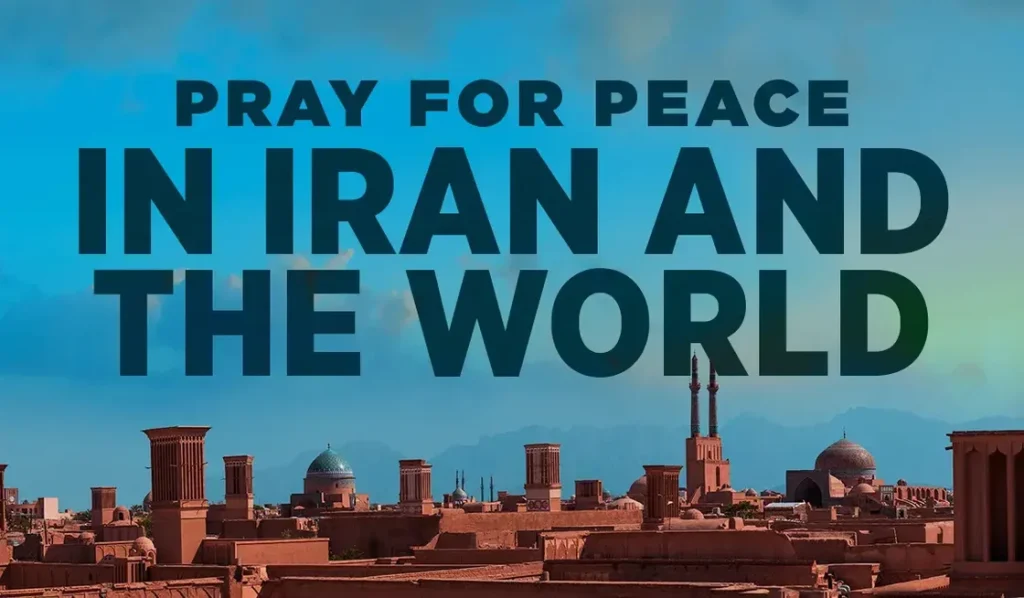
The most important step is to pray—to enlighten our hearts and to protect all those in harm’s way—especially innocents and our own troops. Next, we must properly name what’s happening.
While Congress has not officially declared war on any country since World War II, President Trump is using the means of war while remaining, he believes, within the powers given to the President under Article II of the U.S. Constitution.
For Catholics, this means the President’s actions must be measured using the time-tested dictates of Just War Theory.
When is a war just? The Catechism of the Catholic Church (§2309) and traditional teaching explain that a just war must meet four strict criteria:
- The aggressor’s damage must be lasting, grave, and certain.
- All other means of resolution must be ineffective.
- There must be serious prospects of success.
- The war must not produce evils graver than the original situation.
Is the cause just? Has Iran caused the United States or neighboring countries lasting, grave, and certain harm? Some argue that Iran’s past deadly assaults on Americans, its unabated nuclear ambitions, and the Iranian government’s unrelenting hatred of America more than reach the level of trauma indicated by this criterion. Detractors of military action say Iran poses no immediate threat and there is no reliable evidence of a soon-to-be-nuclear Iran, therefore war cannot be justified. This remains a contentious debate.
Is there right intention behind the military action? Are we attacking Iran in pursuit of peace and justice for us and also the people of Iran? Or are we simply seeking access to oil? Is war legitimately the last resort? Are recent concessions suggested by Iran enough reason to forestall military strikes in favor of continued diplomatic efforts, or do the past 47 years of failed conversation merit moving on from discussion?
What is the probability of success? Can the United States indeed achieve its goals vis-à-vis Iran? Have those goals been clearly articulated? Are we running the risk of a prolonged Afghanistan-style physical occupation of Iran?
Does the damage being done outweigh the evil being targeted? How dangerous would a nuclear Iran truly be to the United States?
Here’s what we know:
- War is always terrible, even when it is justified.
- Iran’s leaders killed tens of thousands of innocents, including Iranians.
- Iran is the world’s leading sponsor of terrorism.
- Iran was building nuclear weapons and refused to stop or allow legitimate inspections.
- Iran’s government calls America “the great Satan” and has attempted to assassinate our President.
Here’s what we don’t know:
- How real is the threat of a nuclear Iran?
- If that threat exists, how imminent was it at the time of these strikes?
- Is it truly possible to achieve success without a prolonged, boots-on-the-ground engagement that endangers more and more lives?
- What government will Iran have after this military engagement? Will it be better or worse?
None of us is in a position to answer all of the questions raised by Operation Epic Fury with certainty. So we must take care in forming and voicing our opinions.
One thing I believe we can all agree on is the need to pray.
Pray for peace.
Pray for restraint among leaders.
Pray for the protection of innocent life—American, Iranian, Israeli, and all others who could be drawn into this conflict.
Pray for justice guided by wisdom, not vengeance.


Leave a Reply to David Kimbley Cancel reply