The payoffs are so huge for the traffickers that they are OK with risking death. Excerpts below the link.
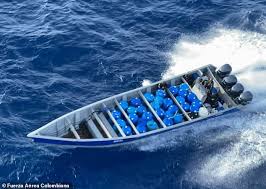
CALI, Colombia—They see themselves as the cowboys of the drug trade, highly experienced crews that ferry narcotics on small boats across the open seas, running on a mix of bravado, skill and dreams of a massive payday.
Now, designated as terrorists by the Trump administration, they face not only the perils of a capricious sea but the new danger of getting blown out of the water by the U.S. military. The trade’s unofficial motto—“deliver or die”—has never rung so true.
Three men who have manned these drug boats, known as “go fasts,” spoke to The Wall Street Journal, describing a once little-known but essential part of the narcotics trade that is now in President Trump’s sights.
They run drug cargoes worth as much as $70 million on the sleek 40-foot-long boats, often built from fiberglass and powered by oversize outboards. These boats are the workhorses for the traffickers along 2,000 miles of Colombian coastline—and hundreds more miles in Ecuador and Venezuela.
“These people are experts at sea,” said a Colombian prosecutor who has tried members of drug-boat crews. Pursuing drug cases is so dangerous that the country’s attorney general doesn’t allow prosecutors to be quoted by name. “They have to know it perfectly,” the prosecutor said. “They need to understand how waves move, how to move a boat through them.”
Prosecutors and former naval officials say many of the pilots and crew of the go-fast boats got their start as fishermen before transitioning into smuggling. The crews are usually made up of three or four men: a pilot, the most experienced and best paid; a mechanic who troubleshoots and keeps the boat’s fuel tanks full; a guarantor trusted by the buyer and seller; and sometimes a navigator to chart the way.
********************
Even with the new threats, the incentives remain huge. The pilot said a clean run of two or three tons can mean $100,000 for a day’s work. With that kind of money at stake, he said it wouldn’t be hard to find willing men to keep running the boats, even with the threat of military strikes.
*********************
In an interview in the southwestern Colombia city of Cali where he lives, the slim, soft-spoken 29-year-old Colombian recalled how the operation began with the speedboat shooting out of a mangrove swamp, twin 250-horsepower engines roaring as the pilot next to him gunned the craft under a night sky.
The pilot kept the throttle down, never slowing as the vessel raced offshore, far beyond the inlets where the drugs were loaded, past Colombia’s territorial limit and into international waters, 200 nautical miles from land.
The crewman, whose job was to keep the fuel flowing into the engines, said he scanned the horizon for Colombian navy patrols as the boat slammed on the water, the pilot pushing for speed in a violent ride that unnerved the crew.
“Traveling that fast is not easy. I tried not to pay attention,” he said. “And the waves were huge.”
Twelve hours later, the craft idled—ever so briefly—until what counterdrug officials call a “narco sub” appeared and stopped alongside. The boat’s three crewmen then transferred a half ton of cocaine—worth $12 million on the street—onto the semisubmersible. Skimming along the waterline, the new craft and crew headed north to Mexico, the next link before reaching America’s cocaine market.
The 29-year-old said he earned about $10,000—good money in Colombia but far below what pilots pocket. He said he was unlikely to ever see those crew members again.
I think the article is using the term “pilot” very loosely. Skipper might be more appropriate.
Generally speaking, become a sea pilot, you need a strong maritime education, typically starting with a degree in nautical science, followed by several years of experience as a merchant marine officer. The studies involve a mix of university-level education and extensive practical, on-the-job training. Key steps include obtaining a Chief Officer license and completing the required practical and theoretical assessments for a pilot position.
* to.. (become a sea pilot)