I love it. “Peter among us.” this is from The Pillar, a Catholic online publication.
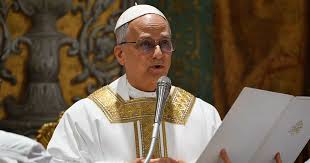
Edgar Beltran broke down several key points in the text.
For myself, I was struck by the pope’s lament that “new Orwellian-style language is developing which, in an attempt to be increasingly inclusive, ends up excluding those who do not conform to the ideologies that are fueling it.”
Orwellian-language, the pope said, leads to a kind of reframing moral realities, in a way that erodes the freedom of conscience.
“Conscientious objection allows individuals to refuse legal or professional obligations that conflict with moral, ethical or religious principles deeply rooted in their personal lives. This may be the refusal of military service in the name of non-violence, or the refusal on the part of doctors and healthcare professionals to engage in practices such as abortion or euthanasia,” he said.
The pope lamented especially that “religious freedom risks being curtailed” — both in countries where Christians face violent persecution, and in the developed West.
These recognitions are important, of course, as are the pope’s recognition of threats to the family, the unborn, and others on the margins, but I am struck most at the solutions embedded in the pontiff’s speech.
Because the address was not merely a call for human efforts like “dialogue” or “fraternity.” It did not have the character of a can’t-we-all-just-get-along invocation.
Instead, it grounded the solution to the world’s problems squarely in Christ, “who took upon himself our humanity in order to make us partakers in his divine life.”
Framed in his own Augustinian viewpoint, the pope aimed, like Augustine, to “interpret events and history” according to the model of two cities: the city of God, and the earthly city.
And the pontiff was direct: “the earthly city is centered on pride and self-love (amor sui), on the thirst for worldly power and glory that leads to destruction,” while “the city of God .. is eternal and characterized by God’s unconditional love, as well as love for one’s neighbor, especially the poor.”
In that framing, the pope invited global diplomats into a Christian worldview, with a sense that imitation of God himself is the means for a just and constructive politics.
This is not a call for conversation. It is a call for conversion.
I’ve been struck by that approach of Leo XIV from the beginning.
When he came out on the loggia just hours after his election, he wished peace on the people of Rome and the people of the world. But it wasn’t a vague sense of peace, it wasn’t the peace of human solidarity, it was, explicitly: the peace of Christ.
Leo is revealing himself to be — in the work of his office and even in the language of diplomacy — an evangelist, whose discussion of temporal realities is meant to point his audience to the eternal and transcendent — to God himself.
This is good news for the Church. Whatever his style, his irenic disposition, his approach to governance proves to be — none of those things should miss what is emerging as a fundamental point about the pope: He sees, believes, and teaches, at near every opportunity, that the answers to the problems of the world are Christ himself — that dialogue and fraternity are not ends in themselves, but that they are made possible through communion with the eternal God.
This is the lesson the pope wants to convey.
Let those who have ears hear it.