This is a good essay that was republished and emailed around by the Catholic League. It’s posted by me in full. Very thoughtful and well worth reading the full essay.
The following was written by Paul Kengor, the editor-in-chief of the American Spectator and a member of the Catholic League advisory board. This article was originally published in the American Spectator.
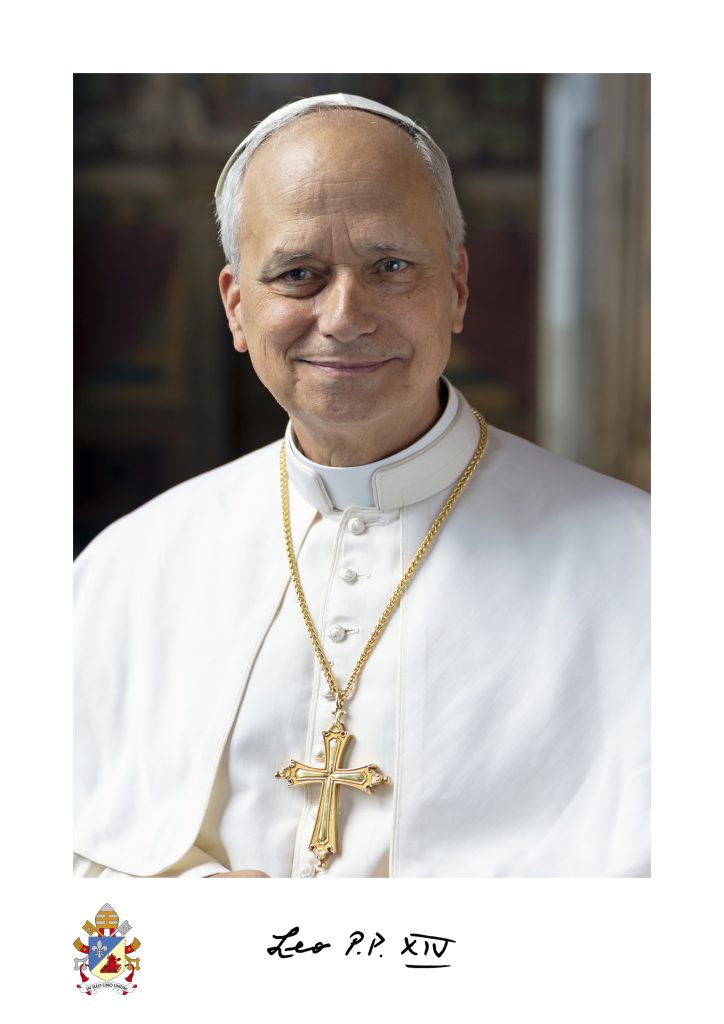
April 20, 2026
Donald Trump’s Truth Social post against Pope Leo is unprecedented in the history of the presidency and papacy. No president has ever made such a statement, even as previous popes urged peace during wartime and opposed specific U.S. interventions. Our Aubrey Harris noted examples going back to Pope Benedict XV and World War I. Others are detailing examples from throughout the 20th century. They’ve continued into this century.
In recent times, President George W. Bush felt no compulsion to publicly denounce Pope John Paul II when the sainted pontiff opposed the U.S. war in Iraq — a war that Donald Trump opposed. The Bush administration insisted that Saddam Hussein was on the cusp of a nuclear weapon. Donald Trump insists that Bush lied. Today, Trump insists Iran is on the cusp of a nuclear weapon.
Putting aside the basis for those claims, one marvels at the recklessness of Trump’s post, including his repeated assertion there and elsewhere that Pope Leo “thinks it’s OK for Iran to have a Nuclear Weapon.” The pope never said any such thing, just as John Paul II opposed the Iraq war but certainly didn’t think it would be okay if Saddam had nukes.
In his Truth Social post, Trump smacked Pope Leo with a litany of blistering charges, most of them distortions and exaggerations (his anger and suspicions of David Axelrod meeting with Leo were more understandable), such as his self-absorbed assertion that “If I wasn’t in the White House, Leo wouldn’t be in the Vatican.” As someone who just published a 400-plus page biography of the American pontiff, I can say emphatically that that’s ridiculous.
The cardinal electors in the conclave did not pick Robert Francis Prevost as pope because of Donald Trump.
That said, the one Trump assertion where I feel I can be helpful — given my lifelong study not only of popes and presidents and Catholicism but of conservatism — are the loud claims by Trump and his supporters that Pope Leo is a liberal, a leftist, a person who (in Trump’s words) “should get his act together as Pope, use Common Sense, stop catering to the Radical Left.”
“I’m not a big fan of Pope Leo,” states Trump. “He’s a very liberal person.”
That assertion from Trump is utterly untrue.
Robert Francis Prevost: Conservative Republican
Pope Leo XIV, formerly Robert Francis Prevost, is a conservative. Moreover, he’s a Republican. He has been a conservative and a Republican surely longer than Donald Trump. During his 11- month papacy thus far, that has continued to be the case. And Prevost most certainly has long been a committed Christian longer than Trump. Given Trump’s unhinged Easter Sunday message, as well as other actions (including a blasphemous image), some are arguing that he isn’t a Christian at all, or at least not acting like a very good one. As someone who wrote a piece last year titled, “God and Donald Trump,” I’m not questioning his belief in God.
But for the record, principled Christian convictions are fundamental to a principled conservatism, as I’ll note below.
I don’t have tens of thousands of words here (as I did in my book) to lay out the beliefs of Robert Francis Prevost in this already lengthy piece, but I’ll offer a few examples.
Way back in the late 1970s, when Donald Trump was a libertine playboy who supported abortion, Prevost was walking in the first Marches for Life in Washington, DC. At Villanova University, he started the pro-life club. Those pro-life convictions never wavered. He has been consistently conservative on moral-cultural issues his entire life, and has spoken up throughout his papacy.
Jumping ahead to modern times and the decade before he was elected pope, Prevost in an October 2012 talk at Pope Benedict’s synod on the New Evangelization lamented how the secular Western mass media was promoting “anti-Christian lifestyle choices,” including “abortion, homosexual lifestyle, euthanasia” as well as the “redefinition of marriage” and “alternative families comprised of same-sex partners and their adopted children.” Prevost had stated:
Western mass media is extraordinarily effective in fostering within the general public enormous sympathy for beliefs and practices that are at odds with the Gospel. For example, abortion, the homosexual lifestyle, euthanasia….
The sympathy for anti-Christian lifestyle choices that mass media fosters is so brilliantly and artfully ingrained in the viewing public, that when people hear the Christian message, it often inevitably seems ideological and emotionally cruel, by contrast to the ostensible humaneness of the anti-Christian perspective. Catholic pastors who preach against the legalization of abortion or the redefinition of marriage, are portrayed as being ideologically driven, severe, and uncaring, not because of anything they say or do, but because their audiences contrast their message with the sympathetic, caring tones of media-produced images of human beings who, because they are caught in morally complex life situations, opt for choices that are made to appear as healthful and good.
Note, for example, how alternative families comprised of same-sex partners and their adopted children are so benignly and sympathetically portrayed in television programs and cinema today.
Needless to say, Donald Trump has never said anything like that. Trump wouldn’t because he doesn’t believe it.
When these words (accompanied by video) from Prevost were published by Francis X. Rocca in a May 10, 2025 piece for National Catholic Register just two days after Prevost’s election as pope, they went viral. Secular leftists roared that the new pope was “homophobic,” “intolerant,” and a “hater.”
But regardless of the uproar, Prevost had made clear his position. Since he became pope, he has continued to speak out on these issues — certainly more so in the last year than Trump. In fact, pro-lifers and cultural conservatives have been complaining that Trump (in their view) has abandoned them on issues like abortion since the 2024 presidential campaign.
Since becoming pope, Leo has spoken out more against same-sex marriage and abortion and gender than Trump. Those are defining issues that make one’s conservatism (or lack thereof) clear.
The Pope Is a Republican
Obviously, these cultural-social-sexual views of Prevost accord with American conservative Republicans and directly oppose American liberal Democrats. As noted by Prevost’s brother Lou (in an interview with Piers Morgan), the pope is not “woke.” (Lou is a MAGA Trump supporter, which is why Trump says he “likes” Lou: “I like [the pope’s] brother Louis much better than I like him, because Louis is all MAGA.”)
Prevost spent over two decades in Peru. When he came back home to Illinois, he voted consistently in the state Republican primaries: in 2012, 2014, and 2016. He voted in the general elections in 2012, 2014, 2018, and 2024 (apparently skipping the 2020 election). He voted in the 2024 presidential election via absentee ballot, given that he was a cardinal in Rome that year.
To repeat, when he voted in primaries, he voted not in the Democratic primaries, but Republican.
The True Meaning of Conservatism
Trump and his most devoted followers protest that Pope Leo isn’t with the president on the war and immigration. We could walk through the nuances of those issues. I’ve written here repeatedly on the pope and the war. This particular pope is an expert on Saint Augustine. He describes himself a “son of Augustine.” He headed the international Augustinian order. Anyone with common sense ought to figure that this pope knows a thing or too about, say, Augustinian Just War doctrine, and should concede that he has thought much longer and more carefully about questions of the morality of war more than Donald Trump has.
As for immigration, I could do a separate piece on Leo on immigration, and would there need to make lots of distinctions between him and obnoxious liberal American bishops who are not the measured, careful thinker that the pope is.
But either way, conservatism — as we’ve long understood it — has never been defined by positions on immigration or even foreign policy, nor a particular military intervention abroad. There has long been a battle between isolationist and interventionist Republicans. A conservative like Pat Buchanan is restrictive on immigration and non-interventionist abroad. Trump himself had that stance in his first term, but not in the second.
Classic conservatism is understood as an attitude, a belief in what T.S. Eliot called the “permanent things.” It is based on tradition, on what Russell Kirk called “an enduring moral order,” on what Edmund Burke referred to as an “eternal contract” between the living, the dead, and those yet to be born.
Kirk said that conservatives believe “in the existence of certain abiding truths which govern the conduct of human society.” Said Kirk: “Men and nations are governed by moral laws; and those laws have their origin in a wisdom that is more than human — in divine justice. At heart, political problems are moral and religious problems. The wise statesman tries to apprehend the moral law and govern his conduct accordingly.”
Think about that.
Russell Kirk went further: “We have a moral debt to our ancestors, who bestowed upon us our civilization, and a moral obligation to the generations who will come after us. This debt is ordained of God. We have no right, therefore, to tamper impudently with human nature or with the delicate fabric of our civil social order.” Thus, the conservative opposes something like “gay marriage” or “gender transitioning.”
Quoting Edmund Burke, Kirk observed that, “The past is a great storehouse of wisdom; as Burke said, ‘The individual is foolish, but the species is wise.’ The conservative believes that we need to guide ourselves by the moral traditions, the social experience, and the whole complex body of knowledge bequeathed to us by our ancestors.”
Ronald Reagan believed that as well. In a speech at CPAC in February 1977, Reagan put it this way: “Conservative wisdom and principles are derived from willingness to learn, not just from what is going on now, but from what has happened before. The principles of conservatism are sound because they are based on what men and women have discovered through experience in not just one generation or a dozen, but in all the combined experience of mankind.” Reagan there was echoing a quote from G. K. Chesterton.
The likes of Reagan, Kirk, Burke, Chesterton, and William F. Buckley, Jr., noted that a religious foundation is essential to conservatism. They conceded that not all religious people are conservatives and not all conservatives are religious people. And yet, there could be no conservatism without a religious foundation.
Conservatives believe in time-tested values and ideals — the ones that rightly endure. This enduring moral order is based on natural law and divine law. As for natural law, Cicero said: “True law is right reason in agreement with nature; it is of universal application, unchanging and everlasting.” Saint Augustine referred to it is “the law written in the human heart … the light we call the truth.” As Saint Thomas Aquinas put it, natural law allows us to “know what we must do and what we must avoid. God has given this light or law at the creation.” All of which bears on this crucial point and theme of this article: This is what Pope Leo believes. Robert Francis Prevost comes to this thinking from a well-formed and well-read Catholic tradition instilled in him over many decades. He had decades of Augustinian education. He did his doctoral work in Canon Law in Rome at the Pontifical University of Saint Thomas Aquinas, also known as the Angelicum.
The pope is the inheritor of two thousand years of such tradition. He upholds the Magisterial teachings of the Church. This pope gave an excellent speech early in his papacy (on May 17 to the Centesimus Annus Pro Pontifice Foundation) clarifying the primacy of doctrine over indoctrination. His beliefs are anchored in centuries of carefully constructed doctrinal teachings.
This Is Not Donald Trump
You will notice, of course, that nothing I’ve laid out here should have a damned thing to do with whether one supports Donald Trump’s current war policy or his position on, say, deportations or ICE. Matters like that do not determine whether you’re a conservative.
It’s highly debatable whether Donald Trump is a conscious conservative at all. I say that not to demean him, nor even to argue against his policies or voting for him. Trump is an altogether different politician. As for how his policy preferences align with conservative beliefs, I wrote a piece for The American Spectator noting that Trump (at least after his first term) could check most of the boxes to qualify as a “Reagan conservative.” Trump expresses less of a classic, principled conservatism than a patriotic populism-nationalism. He believes in lower taxes and largely in free markets and smaller government. His restrained actions abroad in the first term contrast markedly with the first year of his second term, so much so that his supporters are debating whether this America First isolationist has morphed into a foreign interventionist, following less a paleoconservative bent than something more reflective of a neoconservatism that Trump’s most vociferous supporters once excoriated.
Donald Trump himself would surely concede that he has no intellectual or deep philosophical understanding of conservatism. He isn’t well read in that subject. You wouldn’t look to him for an informed contrast between paleoconservatives versus neoconservatives. And that’s fine. That’s not who he is. And yet, he and his supporters — despite his lack of philosophical-ideological underpinnings — are willing to issue full-throated denunciations of the current pope as “very liberal.” How would Donald Trump even know that? Unlike, say, real estate or the stock market, this just isn’t his area of expertise or even knowledge.
So, to repeat: how can Trump claim to know and insist and scream and shout that the pope is a liberal/leftist? The answer is as simple as it is silly: because Pope Leo isn’t with Donald Trump on Iran and maybe another issue or two. That’s astoundingly shallow, but that’s why Leo is getting rung up by Trump. If Leo was in his corner, Trump wouldn’t be calling him names. He would “like him,” just as he “likes” the pope’s brother.
Sure, some might argue that Trump’s current policies on, say, Iran and immigration are preferable to whatever “policy” the pope might have on those matters. But they shouldn’t take the leap — or follow the lead — of Trump in insisting that this makes Leo a liberal. As Pope Leo noted in his response to Trump, he’s not a politician. He’s a pope.
Pope Leo is not liberal. He never has been. And he has always been more conservative than Donald Trump. And as the pope said, he is not afraid of the Trump administration and the accusations, nor should he be.