I have not read it; prints out at 51 pages on the Vatican website and there are no pdf’s currently online. I will read it – ordered it from Amazon but won’t have a hard copy or kindle for awhile.
The summary below (5 minute read) is from the Catholic League where presumably several people had advanced copies. And the link below that is from Ascension Press. Clearly Pope Leo is writing about much more than artificial intelligence.
May 26, 2026
In 1891, Pope Leo XIII gave us the encyclical, Rerum Novarum (“new things”), which affirmed the dignity of work and the need for a fair wage. It was also a qualified endorsement of private property and a denunciation of socialism.
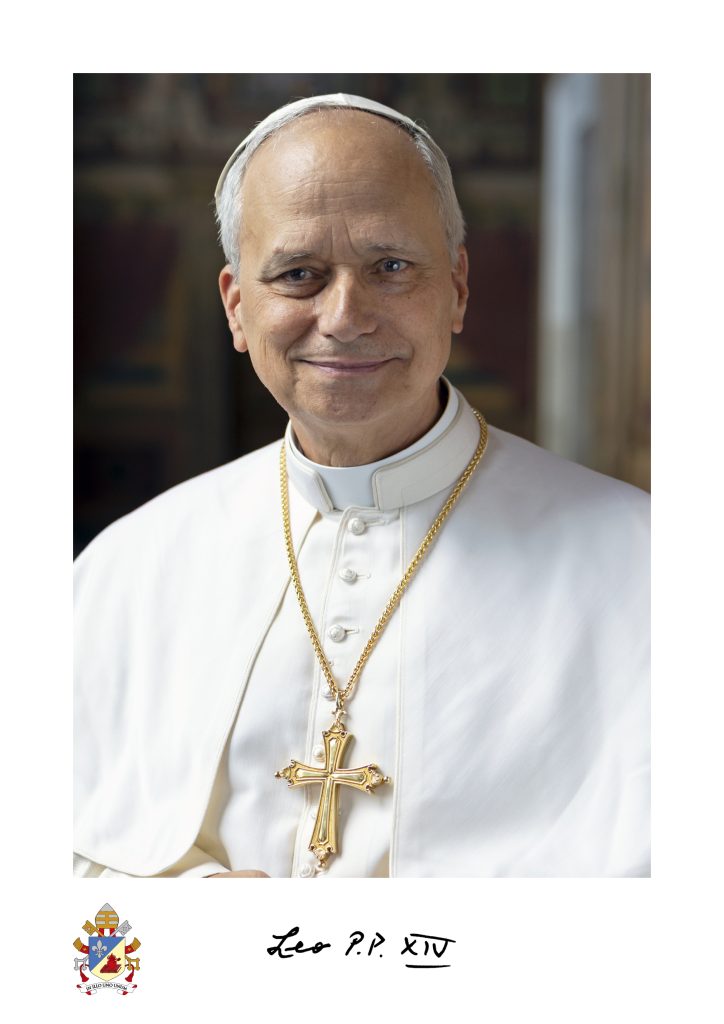
Now, on the 135th anniversary of that encyclical, Pope Leo XIV gives us “Magnifica Humanitas: On Safeguarding the Human Person in the Time of Artificial Intelligence.” He begins by nicely laying out the moral groundwork that must undergird AI, and then he addresses his subject in detail.
Leo draws on Saint John Paul II who welcomed “the rise of democracy and the market economy.” He picks up on that theme, emphasizing the right to private property, noting that “it is always subordinate” to the common good. That end presupposes that we are not just an aggregate of individuals; rather, we are “interconnected” and are jointly responsible for the commonwealth.
To facilitate the pursuit of the common good, the pope says we must abide by the principle of subsidiarity, meaning that, ideally, civic duties should be handled at the level closest to the individual. To achieve this end we must strengthen “the fabric of associations and communities while avoiding further centralization of power.”
Leo insists on coupling human rights with human dignity. Owing to our human dignity, human rights are “universal and inalienable,” and among those rights “the first is the right to life, from conception to its natural end.” He explicitly cites abortion and euthanasia as contrary to human dignity and a violation of human rights.
Thus does he set the stage for a discussion of AI. At bottom, he understands that AI is here to stay, like it or not.
Contrary to some media accounts, he is not opposed to it; rather, he is opposed to its manipulation in the hands of unscrupulous individuals and groups. Similarly, it has been misreported that when he says he would like to “disarm” AI, he does not mean he wants to extinguish it. “To disarm,” he writes, “does not mean rejecting technology, but preventing it from dominating humanity.”
Technology, he says, can be a force for good or ill. He implores us to guard against the “risk of dehumanization,” i.e., “building a future that excludes God and reduces others to a means.”
The digital revolution, the Holy Father says, has changed the principle of subsidiarity. No longer is the State the highest level—now it is those who command the technological expertise to radically transform society. This means we must protect against the monopolization of data and decision-making authority. We must resist technological actors who seek to impose on us their grand designs.
AI is not human. Leo offers this insightful nugget. “So-called artificial intelligences do not undergo experiences, do not possess a body, do not feel joy or pain, do not mature through relationships and do not know from within what love, work, friendship or responsibility mean. Nor do they have a moral conscience, since they do not judge good and evil, grasp the ultimate meaning of situations, or bear responsibility for consequences.”
While AI has no moral conscience, the pope hastens to add that “we cannot consider AI to be morally neutral.” That is because “every technical tool embodies choices and priorities through what it measures, ignores and optimizes, and how it classifies people and situations.” What worries him is the reality that “small but highly influential groups can shape information and consumption patterns,” and affect political and economic dynamics to suit themselves, not the common good.
One of the greatest dangers AI poses is the specter of transhumanism and posthumanism. It is undeniably true that the perfection of human beings is an obsession with some technocrats. Indeed, some think they can a create hybridization of human beings. “If the human being is treated as something to be perfected or surpassed,” Leo warns, “it becomes easier to accept that some lives are less useful, less desirable or less worthy.”
The pope is also adept at noting how unsupervised children are being swallowed up by digital devices and how social media is affecting their psyches. Lower attention spans, sleep deprivation, inability to control emotions—all of this is well documented. Exposure to pornography, hypersexualized material, as well as cyberbullying, are threats to the wellbeing of young people.
He admonishes us not to allow AI to transform us into a new form of slavery. We are being reduced to “data” that allows us to be tracked and treated as “packages” to be moved around with abandon. It is not enough to “invoke efficiency,” especially if it results in a “chain of exploitation.”
Pope Leo ends with a plea not to allow AI to be entrusted with war-like powers. “No algorithm can make war morally acceptable.” Following Pope Francis, he says the “just war” theory is “outdated.” He did not proffer an alternative thesis.
Science tells us what we can do. It does not tell us what we should do. This powerful encyclical should reach an audience well beyond the Catholic community. Pope Leo XIV has given us much to weigh.
Here is the Ascension link –
This is good and important.