Appearing in yesterday’s Journal. I agree.
The IPO (Initial Public Offering) went live a bit before noontime Friday. Everyone is happy – SpaceX got their $75 billion, the consortium of Investment Banks got $1 billion dollars in fees to split amongst themselves, many thousands of the 22,000 SpaceX employees became instant millionaires – a few became billionaires – and the stock closed above $161, a 20% gain.
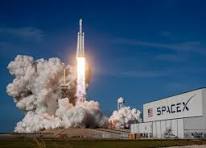
At the close of trading on Friday, SpaceX boasted a $2.1 trillion—yes, trillion—market valuation. The company raised $75 billion in its public debut, nearly three times more than the previous largest IPO (Saudi Aramco in 2019). It will need that money and multiples more to achieve Mr. Musk’s ambition of colonizing Mars and mining asteroids.
If the IPO had happened in China, the press would be mourning America’s economic decline. Instead, they are lamenting Mr. Musk’s riches. “Elon Musk is the world’s first trillionaire,” Bloomberg News writes. “He could theoretically do a lot with all that money—like fund 68 US election cycles or buy every carmaker in the US, Europe and Japan.” The grievance mood is strong these days at Bloomberg and most of the rest of the financial press.
Mr. Musk’s wealth largely consists of shares in SpaceX and Tesla. Their current stratospheric values could crash if the companies fail or investors lose faith in Mr. Musk. And mom and pop investors should know the risks in buying SpaceX shares. In any event, Mr. Musk’s wealth is a tribute to U.S. entrepreneurship and innovation, which are byproducts of its free-market system.
Mr. Musk, an immigrant from South Africa, launched the rocket company in 2002 with money he made from his PayPal startup. “It is certainly hard to believe that little company that started in a warehouse in El Segundo is now going public with the largest IPO ever,” he said Friday. SpaceX faced many early setbacks. Its Falcon 1 failed three times before reaching orbit in 2008.
A few months later, NASA awarded SpaceX a contract to supply the International Space Station. SpaceX later developed reusable rockets that greatly reduce launch costs, which the Chinese are still trying to achieve. Its success, which came through trial and failure, has ended U.S. reliance on Russia to transport astronauts to the space station and launch American satellites. The company is the leading edge of what could be the space economy.
In 2015 SpaceX launched Starlink, an internet satellite company that has helped Ukraine resist Russia’s invasion and dissidents living under authoritarian regimes like Iran to communicate. Mr. Musk this year merged his social-media company X.com and xAI startup with SpaceX, providing them with a vehicle to go public.
SpaceX has created thousands of jobs in working-class communities where it operates. That includes Hawthorne, Calif., Bastrop and McGregor in Texas, Memphis, Tenn., and Southaven, Miss. Its workers—including hourly blue-collar workers—receive stock options, which has allowed them to share in the company’s success.
By one estimate, the IPO has made millionaires of 4,400 SpaceX current and former employees, including 400 who hold shares worth more than $100 million. If you listen to union leaders and progressives, billionaires get rich by exploiting workers. SpaceX couldn’t succeed without its workers—as it notes in its IPO prospectus—and they would leave if they felt abused.
The IPO is giving workers and retail investors a chance to share in any future growth. It’s also allowing venture investors to cash out and pour their windfalls into new startups working on innovations that could improve and even save lives—e.g., cancer vaccines. Who knows which of these companies could someday be worth a trillion dollars?
With their envy of success and wealth, our political class ignores that financial rewards are what spur investors and entrepreneurs to take risks on companies that make all Americans better off. You don’t have to like Mr. Musk to appreciate what he has built.