I finished it about a week ago, over a space of six days. Total time 2 and a half hours and no jargon or BS. I am waiting for a hard copy but I was able to get it on my kindle for $2.99.
It is more than just a commentary on AI and the danger of technology running amok. Note his mention of “fake news” in the last section I’ve excerpted!
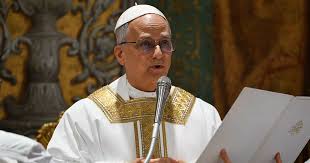
Here are a few quotes on disparate topics.
5. It now falls to us to face the challenges of our time with clarity of thought and responsibility. It is necessary to establish adequate regulatory tools capable of upholding justice and curbing the distorting effects of technological power. Nevertheless, the issue is not limited to regulation. …we must realistically ask ourselves who holds this power today and how they use it: “It must also be recognized that nuclear energy, biotechnology, information technology, knowledge of our own DNA, and many other abilities which we have acquired… have given those with the knowledge, and especially the economic resources to use them, an impressive dominance over the whole of humanity and the entire world.”7 In the past, it was largely up to the State to guide and direct innovation. Today, however, the main drivers of development are private, often transnational, parties that are endowed with resources and the capacity to intervene that surpass those of many Governments. Technological power thus takes on an unprecedented, predominantly “private” aspect, which makes it even more challenging to discern, govern and direct such power toward the common good.
30. While many of the historical conditions described by Leo XIII have changed, at least two insights remain highly relevant today: the primacy of human labor over any mindset focused solely on finance or productivity — with the consequent attention to the people and families most susceptible to exploitation — and the inseparable link between proclaiming the Gospel and pursuing a more just social order. Rerum Novarum thereby continues to remind us that there is no authentic evangelization that does not also affect the structures of human society.
51. The fundamental dignity of each person, therefore, is neither acquired nor earned, nor does it need to be justified. The recent Declaration Dignitas Infinita offers a summary of the Church’s thinking on this subject: “Every human person possesses an infinite dignity, inalienably grounded in his or her very being, which prevails in and beyond every circumstance, state, or situation the person may ever encounter”62 — in other words, always and without exception. The dignity of every human being can be described as infinite, as Saint John Paul II stated,63 for two reasons: first, because the love of God, who calls us to friendship with him, is infinite; and second, his love is absolutely unconditional, in the sense that, even if we search endlessly, we will never find anything that can erase or deny it.
The civilization of love in the digital age
186. When Saint Paul VI coined the phrase “the civilization of love,”177 the world was in the midst of the Cold War, an arms race and severe economic instability. In that context, the Church proposed an alternative path to that of ideological opposition between systems, and envisioned a social order in which justice and charity are intertwined and love becomes the guiding principle of economic, political and cultural life. Today, we must resolutely recover this vision, for the civilization of love is no naïve utopia, but a demanding project, which consists in translating charity into structures of justice, giving institutional form to fraternity and regarding others — whether individuals or peoples — as allies necessary for building the common good. As the Encyclical Letter Fratelli Tutti reminded us, only this social love is capable of becoming a culture and a norm, and thereby of bringing about a stable international order, transforming mere armed coexistence into a community with a shared future.178
191 We are also witnessing a disconcerting loss of historical memory, as first-hand accounts of the Holocaust and the two World Wars are disappearing. This leads to a selective or distorted rewriting of the past, in a context where fake news and the manipulation of narratives obscure the lessons that have been learned. Without a living memory of the horrors of war, political decisions risk being made on the basis of power alone, without any consideration for the long-term consequences.