If you’ve been losing sleep over this now you know the answer. Somewhat similar to why people will buy $5,000 to $150,000 watches when a $25 casio keeps better time
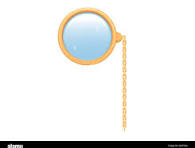
The origin of the monocle is somewhat blurry. It likely developed from the “quizzing glass,” which was a magnifying lens on a handle that was held up to the user’s eye to aid in reading or inspecting objects. The monocle, of course, did away with the handle altogether, and was instead held in place by the eye socket itself.
Monocles helped with reading small print and other tasks requiring near vision. They also had the benefit of allowing both hands to be used freely (unlike the quizzing glass) while also being easy to carry, slipping comfortably into a top pocket.
Monocles, however, have one obvious issue: They correct vision in only one eye.
************************
So why were monocles so popular in the 19th and early 20th centuries? In a word: fashion.
One of the first well-known monocole adopters was the Prussian antiquary Philipp von Stosch, a highly influential art and antiquities dealer in the 18th century. (He also happened to be a spy for the British government.) Von Stosch was a notable figure in European high society, and is widely credited with having made the monocle a fashionable accessory.
************************
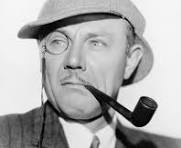
In Britain, the craze began to fade by the end of the 1830s. But monocles didn’t disappear entirely for at least another century; they were still worn in British high society, whether by members of Parliament or well-dressed dandies. By the beginning of the 20th century, the monocle had even become a cultural symbol. Political cartoonists and playwrights used the eyepiece as visual shorthand for the privileged classes — often as a symbol of pomposity and snobbery. But it wasn’t the satirizing of the monocle that led to its fall from grace — it was war.
The monocle was fashionable in Germany, where it was popular among the German aristocracy as well as military leadership. During both World War I and World War II, many notable German generals wore monocles, including World War I General Erich Ludendorff, and the Nazi field marshals Walter von Reichenau and Walter Model, to name but a few. It was this association that ultimately brought about the monocle’s decline, as the eyewear fell out of favor in much of Western Europe and the United States in the wake of these conflicts.