From History Facts – forwarded to Brigid and then on to me.
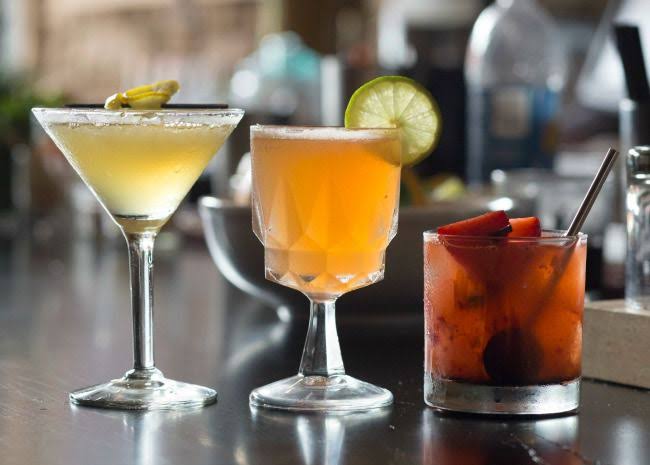
The creation of the cocktail was inspired by punches that combined spirits, fruit juices, and spices in large bowls. Historians suspect these punches originated in the early 17th century with British sailors, who would use local ingredients from India or Indonesia to create their own alcoholic beverages. While beer would spoil during a long voyage, the addition of sugar and citrus to spirits would help preserve the punch.
In a world once dominated by beer and wine, these diverse and flavorful punches were a novelty, and the trend took off. Mixed drinks began as a way to serve a crowd of sailors or aristocrats, and evolved into individual concoctions that played with different combinations of ingredients.
What Makes a Cocktail a Cocktail?
The word “cocktail” was first used to describe a mixed drink in 1803. It appeared in a U.S. newspaper called The Farmer’s Cabinet, though the article didn’t include a definition of what constituted such a drink. The earliest definition of “cock tail” appeared in the May 13, 1806 issue of The Balance and Columbian Repository, which offered this description: “a stimulating liquor, composed of spirits of any kind, sugar, water, and bitters.” The term gradually came to reference any kind of alcoholic mixed drink, and sometimes the word “cocktail” included a modifier — for example, “gin cocktail” — to specify a drink’s primary ingredient. That said, the mixing of ingredients traditionally associated with a cocktail predates the use of the word. In the 18th century, drinks combining a spirit, sweetener, water, and bitters were known to be imbibed, and bitters were often sipped for medicinal purposes.
But the Name?
The origin of the word “cocktail” is as muddled as a mojito. One possible explanation links the word for a mixed drink to a British reference about “cock-tailed” horses — that is, a horse whose tail has been docked or clipped to signify it was of mixed breed. Other theories include a mispronunciation of the French word for egg cup, “coquetier,” which was used as a drinking vessel by the New Orleans apothecary who created the famous Peychaud’s bitters. Some say the name comes from mixing the dregs of spirit barrels, known as “tailings,” and selling them at a low price. Yet another theory posits the name came from a horse breeder’s practice of inserting spices, specifically ginger, into the rear end of a horse in order to make the animal appear more energetic. However it came about, a cocktail by any other name would still taste delicious.
If you hit the link above you will also get to the sections labeled –
What’s So Old-fashioned About an Old Fashioned?
&
The Golden Age of Cocktails
&
here is the last section – Shaken no Stirred
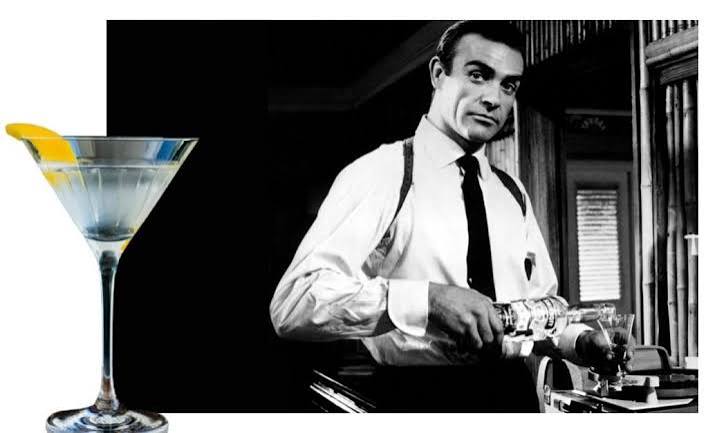
Prohibition may have ended the golden age of cocktails, but the popularity of mixed drinks has shown staying power. Cocktails remained popular in various forms ever since, from the speakeasies and cocktail parties of the Prohibition era, to the tiki bars of the 1940s and ’50s, to the three-martini lunches of the ’60s. A decline occurred in the late ’60s and ’70s, followed by a resurgence beginning in the 1990s. Modern pop culture icons such as James Bond, Carrie Bradshaw, and Don Draper have helped immortalize their favorite drinks (a vodka martini, cosmopolitan, and old fashioned, respectively), and savvy restaurateurs have reinvented Prohibition-era speakeasies. On social media, celebrity mixologists and “cocktail influencers” introduce the next generation of cocktail enthusiasts to exciting new trends, such as extreme beverages that burn, cool, or tingle, contemporary twists on the classics, and inspired mocktails that bring all the flavor without any of the booze. Shaken or stirred, frosty or aflame, cocktail culture endures.